
What is forest therapy?
Forest therapy, otherwise known as forest bathing or shinrin-yoku, is an evidence-based practice, originating in Japan, that boosts both our physical and mental health. It involves a slow, gentle walk through a natural space, with invitations from the guide offering opportunities to deepen our connection with nature. Whether 1:1, or as part of a group, forest therapy sessions are a space away from the pressures of the modern world to relax, reset and ground ourselves.
What are the benefits of forest therapy?
Forest therapy has a wide range of scientifically-evidenced benefits for both our physical and mental health. This deep connection to nature reduces stress, blood pressure and boosts our immune system, offering preventative effects for a range of diseases including cancer. Evidence also shows that forest therapy can support a decrease in symptoms of anxiety, depression and PTSD. When we relax and breathe in the forest, the very chemicals released by the trees and the microbes in the soil have truly healing effects on the human body and brain - we just need to connect with them.
-
Forest Therapy increases our Natural Killer (NK) cell quantity and activity (Li et al, 2010; Li and Kawada, 2011). NK cells are our bodies first line of defence, protecting us from viruses and early stage cancers. A study in Japan showed that those living in areas with higher forest coverage had lower cancer mortality rates (Li et al, 2008).
The phytonicides released by the trees, and the negative air ions that are abundant in forests, have been shown to activate these NK cells (Yamada et al, 2006; Li et al, 2009).
Being in the fresh and clean air of the forest, away from the air pollution of our urban areas, can contribute to a reduced risk of respiratory diseases. Spending time in nature has been shown to reduce allergies in children (Tischer et al, 2017).
-
Many studies have shown that Forest Therapy reduces symptoms of anxiety and depression, using various tools such as the POMS test and WEMWBS before and after a session. This has been demonstrated across many different groups, including middle aged men (Li et al, 2016), female nurses (Li et al, 2008) and students (Li, 2012).
Walking in nature can reduce rumination and support us to think about things with a more positive mindset (Bratman et al, 2015).
Additionally, being in nature reduces amygdala activation, the part of our brain which responds to threat (i.e. fight/flight). For those living with anxiety or PTSD, the amygdala is overactive which can make emotional regulation more challenging.
-
In various studies, blood pressure was measured before and after walking in both the forest and the city. Across the board, blood pressure was reduced only in the forest setting (Li et al, 2011; Mao et al, 2012; Ideno et al, 2017).
This is no surprise when you consider the extreme overstimulation and pollution we have in urban areas which act as a stressor for our bodies and brains (Clarke and Stansfield, 2007; Raap et al, 2015).
Forest Therapy reduces blood pressure by reducing stress hormone levels - adrenaline and cortisol - and by reducing sympathetic nerve activity (fight/flight response) and increasing parasympathetic nerve activity (rest/digest response) (Li et al, 2016; Park et al, 2010).
There is some evidence to suggest that inhaling the chemicals released by the trees, phytonicides, are partially the cause for these positive physical impacts (Li et al, 2009; Dayawansa et al, 2003).
What makes forest bathing different to a walk in nature?
Forest therapy offers an invitation to participants to truly slow down and notice the detail in the world around us, which can often pass us by as we stride through on a walk. There is no intention other than to just ‘be’ for a while, a permission we don’t often grant ourselves in our busy lives. This is not about exercising, or thinking through our to-do lists; it’s not even about clearing our minds. This is simply a way of being that can quite literally ground us to ourselves, Nature and our community. As we deepen our connection to Nature, in return the forest may offer us wisdom and reflection on our thoughts and feelings.
“I loved being in the woods with no real intention; I have only spent time in places like that on dog walks so it was such a different and special experience”
Isabelle, 25
“The guided activities helped me notice things I would normally overlook.”
Jonathan, 48
“I loved that this gave me an excuse to go into the forest with no particular agenda. It gave me permission to take time and explore with open wonder in a beautiful, peaceful and thoughtful space.”
Helly, 54
What can I expect from a session?
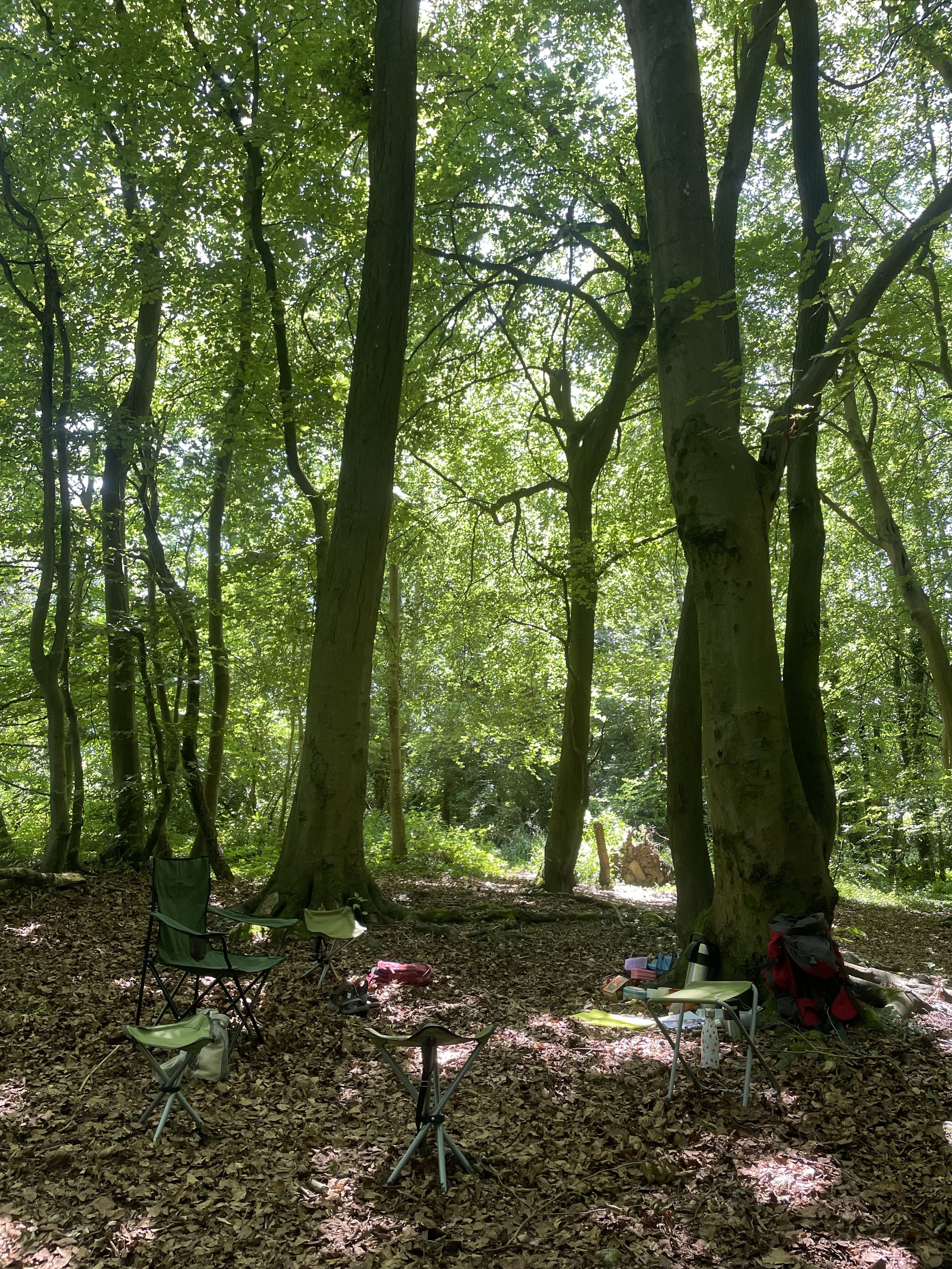
The session consists of a series of invitations offered by your qualified guide, that promote a deeper and more embodied connection to nature. Some invite you to be still, and some involve gentle movement. Forest bathing is not intended to be exercise, and all sessions can be designed to suit different physical health needs.
We will come together in a calm and non-judgemental sharing circle to reflect on our experiences - although it is okay not to share if that doesn't feel right for you. The session finishes with a tea as we discuss any final reflections.
Whilst there is no expectation to feel a certain way during or after a session, past participants report feeling calm and destressed, and found the space hugely beneficial to reflect on their own personal nature connection and various aspects of their lives.